
M A R C O M O N F A R D I N I
U N - L O G


©2025 EXTRAsync
This site does not use cookies or other user data tracking technologies

The term log file refers to a file in which every operation performed by a system or a user is
sequentially and chronologically recorded.
Each event, each error, each movement leaves a trace.The management of logs allows us to
monitor, analyze, and prevent anomalies or threats — a practice of surveillance that, behind
its apparent technical neutrality, has evolved into a global device of memory.
A log file preserves the entire history of actions: an invisible chronicle that mirrors a
controlled time, an automated memory that writes without interruption.It becomes a logbook
of the present, recording every gesture before we are even aware of it.
In UN-LOG (literally “to disconnect”), Marco Monfardini transforms the log file into a
metaphor for our relationship with time and memory.
The log becomes a living organism — a visual and sonic archive in constant writing — a
digital memory that does not forget, that overwrites and replaces human memory. It is an
unconscious map of behavior, a code that registers our passage within the continuous flow
of information.To un-log means to suspend the automatic writing of the digital self, to
interrupt the continuity of recording in order to recover a direct, sensory, and imperfect
perception.
The visual structure of UN-LOG unfolds as a stratified field: a flow of data transforming into
image, a dynamic landscape where glitches, fragments, and errors emerge as the residues of
a corrupted memory.
The image does not represent — it reacts. It expands, fractures, and regenerates in real
time.Video becomes a terrain of tension between order and chaos, a surface reflecting the
density of information and its perceptual erosion. Shadows and lights contend for the same
space, creating zones of interference in which the gaze is forced to decode, reconstruct, and
ultimately lose itself.It is an unstable, hybrid vision, where the aesthetics of error acquire a
poetic value: the visualization of the log becomes a mental landscape, a visual archive of
contemporary noise.
The sound of UN-LOG does not accompany the image — it crosses it, invades it, and decodes
it.It is a multilayered structure built from digital debris: clicks, interference, and residual
signals organized into rhythmic and spatial patterns. Each acoustic impulse acts as a
translation of data, an attempt to make audible the invisible presence of the informational
flux.
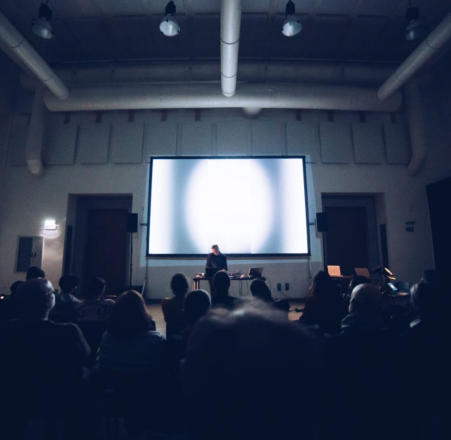
The performance develops as a sonic mapping of the log, where the acoustic landscape
oscillates between hyper-precision and entropic disorder.Listening becomes an act of
resistance: through sound, the work seeks to decode what is constantly being recorded,
restoring body and matter to an immaterial data universe that tends to erase perception.
The result is an audiovisual environment where digital and organic memory collide.Sound
intercepts the residual frequencies of the system, reveals hidden correspondences between
error and life rhythm, and composes a mosaic of irregular, imperfect fragments.
UN-LOG is an act of suspension — a gesture of subtraction at the heart of informational
noise.Through a multilayered audiovisual language, Monfardini explores the possibility of
disconnecting our time from its technological acceleration, reclaiming a perceptual space
where sound and image once again become experience rather than recording.
Within the endless flow of the log, UN-LOG opens a fracture — a threshold between memory
and oblivion, between presence and archiving, between human and system.
M A R C O M O N F A R D I N I
U N - L O G
The
term
log
file
refers
to
a
file
in
which
every
operation
performed
by
a
system or a user is sequentially and chronologically recorded.
Each
event,
each
error,
each
movement
leaves
a
trace.The
management
of
logs
allows
us
to
monitor,
analyze,
and
prevent
anomalies
or
threats
—
a
practice
of
surveillance
that,
behind
its
apparent
technical
neutrality,
has evolved into a global device of memory.
A
log
file
preserves
the
entire
history
of
actions:
an
invisible
chronicle
that
mirrors
a
controlled
time,
an
automated
memory
that
writes
without
interruption.It
becomes
a
logbook
of
the
present
,
recording
every
gesture
before we are even aware of it.
In
UN-LOG
(
literally
“to
disconnect”
),
Marco
Monfardini
transforms
the
log file into a metaphor for our relationship with time and memory.
The
log
becomes
a
living
organism
—
a
visual
and
sonic
archive
in
constant
writing
—
a
digital
memory
that
does
not
forget,
that
overwrites
and
replaces
human
memory.
It
is
an
unconscious
map
of
behavior,
a
code
that
registers
our
passage
within
the
continuous
flow
of
information.To
un-log
means
to
suspend
the
automatic
writing
of
the
digital
self,
to
interrupt
the
continuity
of
recording
in
order
to
recover
a
direct, sensory, and imperfect perception.
The
visual
structure
of
UN-LOG
unfolds
as
a
stratified
field:
a
flow
of
data
transforming
into
image,
a
dynamic
landscape
where
glitches,
fragments, and errors emerge as the residues of a corrupted memory.
The
image
does
not
represent
—
it
reacts.
It
expands,
fractures,
and
regenerates
in
real
time.Video
becomes
a
terrain
of
tension
between
order
and
chaos,
a
surface
reflecting
the
density
of
information
and
its
perceptual
erosion.
Shadows
and
lights
contend
for
the
same
space,
creating
zones
of
interference
in
which
the
gaze
is
forced
to
decode,
reconstruct,
and
ultimately
lose
itself.It
is
an
unstable,
hybrid
vision,
where
the
aesthetics
of
error
acquire
a
poetic
value:
the
visualization
of
the
log
becomes
a
mental
landscape,
a
visual
archive
of
contemporary
noise.
The
sound
of
UN-LOG
does
not
accompany
the
image
—
it
crosses
it,
invades
it,
and
decodes
it.It
is
a
multilayered
structure
built
from
digital
debris:
clicks,
interference,
and
residual
signals
organized
into
rhythmic
and
spatial
patterns.
Each
acoustic
impulse
acts
as
a
translation
of
data,
an
attempt
to
make
audible
the
invisible
presence
of
the
informational
flux.
The
performance
develops
as
a
sonic
mapping
of
the
log
,
where
the
acoustic
landscape
oscillates
between
hyper-precision
and
entropic
disorder.Listening
becomes
an
act
of
resistance:
through
sound,
the
work
seeks
to
decode
what
is
constantly
being
recorded,
restoring
body
and
matter
to
an
immaterial
data
universe
that
tends
to
erase
perception.
The
result
is
an
audiovisual
environment
where
digital
and
organic
memory
collide.Sound
intercepts
the
residual
frequencies
of
the
system,
reveals
hidden
correspondences
between
error
and
life
rhythm,
and
composes a mosaic of irregular, imperfect fragments.
UN-LOG
is
an
act
of
suspension
—
a
gesture
of
subtraction
at
the
heart
of
informational
noise.Through
a
multilayered
audiovisual
language,
Monfardini
explores
the
possibility
of
disconnecting
our
time
from
its
technological
acceleration,
reclaiming
a
perceptual
space
where
sound
and image once again become experience rather than recording.
Within
the
endless
flow
of
the
log,
UN-LOG
opens
a
fracture
—
a
threshold
between
memory
and
oblivion,
between
presence
and
archiving, between human and system.
©2025 EXTRAsync
This site does not use cookies or other user data tracking technologies

